RSVP for our inaugural fundraiser May 16!
Plate and Pathways Community Center
The importance of having a physical community space
BLOG POST
Marcus Tweedy
1/4/20263 min read
Plate and Pathways Community Center: What It Is And Why We Need One
By Marcus Tweedy
It’s harder than ever for everyday Chicagoans to make ends meet. In 2025, the pausing of SNAP benefits and funding cuts to childcare programs caused thousands of Chicagoans to lose resources that allowed them to feed and raise their families. Too many kids in Chicago aren’t allowed just to be kids - instead, they’re coming home to empty fridges, limited supervision, and uncertainty about how they’ll survive.
Plate and Pathways, founded by Alicia Spradley, believes that families deserve better. The organization’s goal is to create a community center: a physical space in Rogers Park where Chicago youth can not only get healthy meals, but learn, grow and interact comfortably with their peers.
Today, we’ll talk about what a community center would bring to Rogers Park, and three reasons it’s needed to build a stronger, more resilient neighborhood.
1. A community center will meet our neighbors’ basic needs.
We can’t wait for Washington to give our families nutritious food and childcare. A community center would provide Rogers Park with consistent access to healthy meals and groceries.
Plate and Pathways already offers several opportunities for Chicago residents to get food, including a food pantry and various food distribution events. One program we recently piloted, called “grocery buddies”, allows one family to directly provide for another by buying their groceries for a period of time. A community center would allow Plate and Pathways to provide for the community on a collective, sustained scale.
By directly reducing the amount that families have to spend on food, the community center would bring immediate economic relief to a neighborhood that badly needs it. Data consistently shows that eliminating food insecurity leads to better outcomes for kids, families, and seniors, especially for unhoused folks.
2. A community center will bring our neighborhood closer together.
Chances are, you’ve heard about the concept of “third places”: spaces where everyday people can gather as a community without the expectation of spending money. These spaces have rapidly disappeared in recent years, especially in major cities like Chicago. Without them, we are more isolated from our neighbors, and our community lacks trust and cohesion.
Plate and Pathways’ community center would fill this void and serve as a welcoming hub where residents are valued, supported and heard. Sharing meals and regular programming would allow for neighbors to connect in ways they haven’t before.
Not only would the center give food to kids and families directly, it would also offer workshops, including live cooking demonstrations, to empower families to prepare meals at home that are nutritious, affordable and culturally relevant. A community center would allow residents to share their skills, cultures, and traditions with neighbors from similar and different backgrounds.
3. A community center will allow our neighbors to become their best selves.
A community center would offer volunteer positions, internships and other skill-building opportunities to Chicago residents at varying stages of life. Participating in internships or volunteer work can significantly increase someone’s ability to get an entry-level job - but too often, these opportunities are only available to those who can already afford essentials. With the center in place, residents could improve their skills and become more job-ready while serving their neighborhood.
Chicago’s children and teens would benefit the most, as the center would offer them a safe, structured environment to study and participate in a range of after-school programming. Students who can participate in after-school activities or enrichment have dramatically better outcomes than students who can’t. When Plate and Pathways launches our community center, kids’ will be able to learn and grow outside of school, regardless of their family’s income.
A Stronger, Better Rogers Park
If you’ve taken a psychology class, you’ve probably seen this diagram before:
Maslow’s Hierarchy of Needs (pictured above) shows human needs on a pyramid - each level of needs will only be met if the levels below are already met. It’s more difficult, for example, to have healthy self-esteem without a sense of belonging - and that requires being physically safe, which requires access to healthy food.
Plate and Pathways has built an incredible foundation through programs and events that help families address their immediate basic needs. At our recent Winter-Wrap Up event, Plate and Pathways volunteers distributed healthy food and warm clothing to dozens of residents. Our long-term vision, though, is greater. By helping residents meet a range of essential needs, the community center would help many people move closer to reaching their true potential.
If Plate and Pathways achieves our goal and opens our community center, residents of Rogers Park will get their basic needs met, become closer with one another, and access growth opportunities they wouldn’t otherwise. Your support today can make Rogers Park a better-fed, more engaged, and more resilient community.
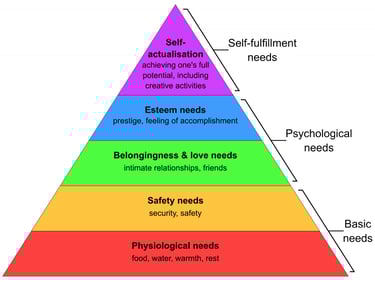
Plate & Pathways
We’re not just serving meals—we’re building a healthier, more hopeful future for every family we reach.
Contact us
Nondiscrimination Policy
Email: connect@plateandpathways.org
Phone: 773-803-1406 (call or text)
© 2025. All rights reserved.
Serving Rogers Park & Surrounding Areas of Chicago, IL and Evanston, IL
Plate & Pathways is committed to providing an inclusive and welcoming environment. We do not discriminate on the basis of race, color, ethnicity, national origin, religion, sex, gender identity or expression, sexual orientation, age, disability, veteran status, or any other characteristic protected by law.
(Formerly My Family's Table)